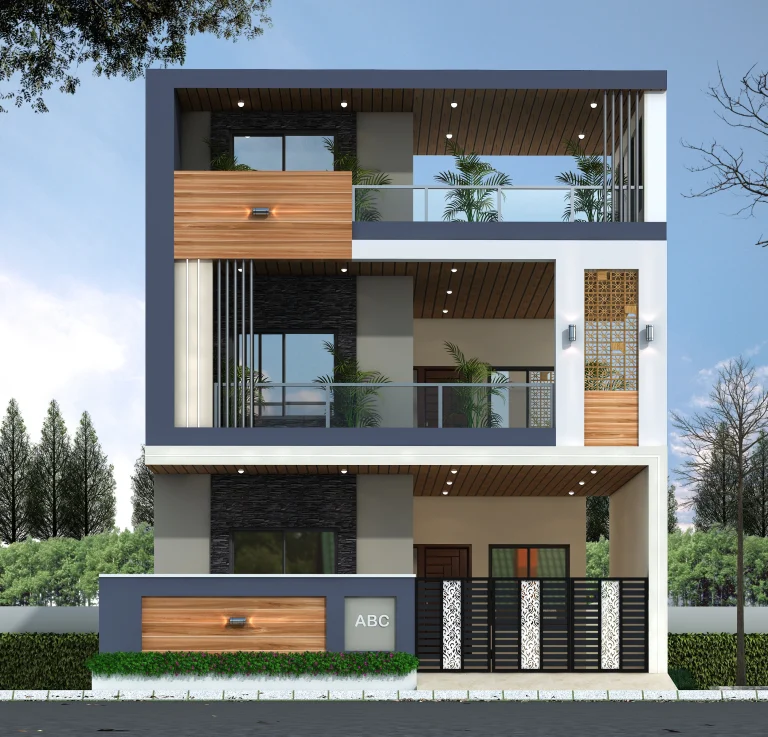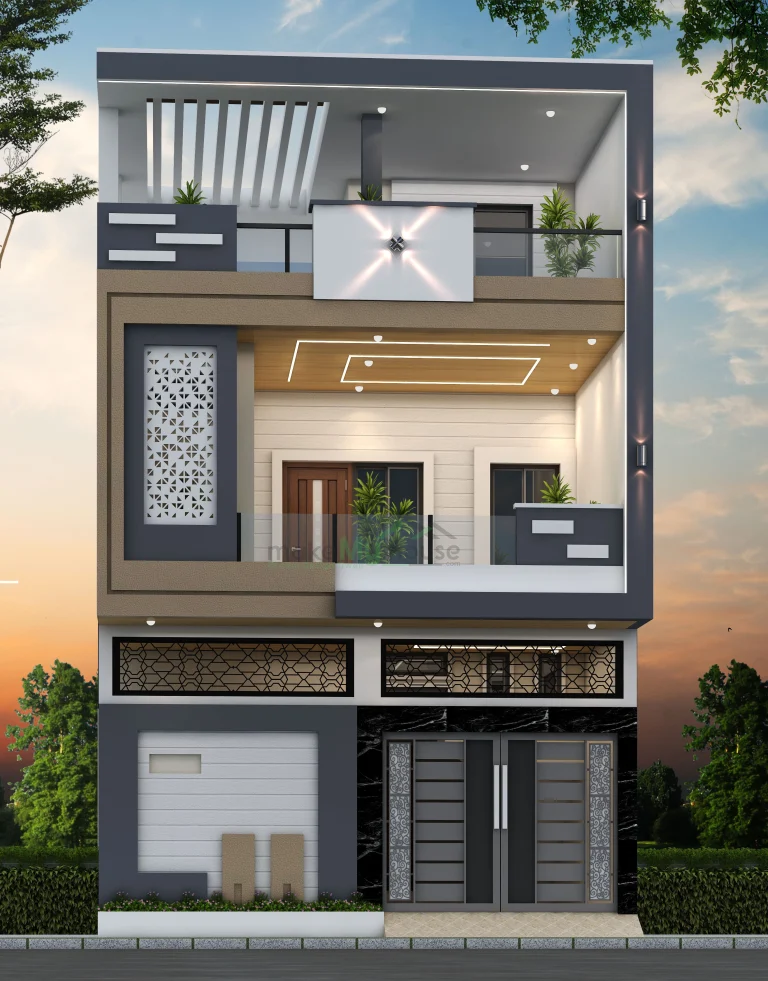
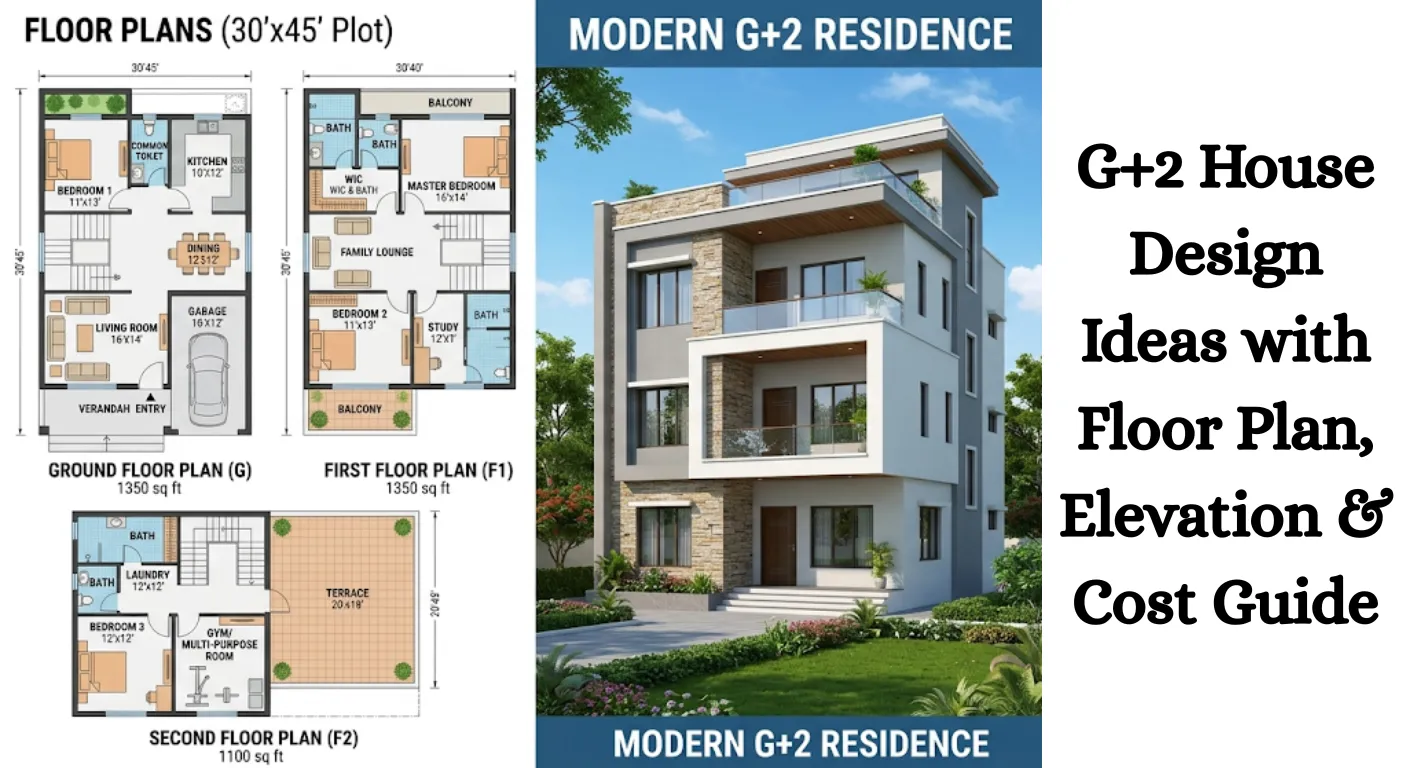
G+2 House Design Ideas with Floor Plan, Elevation & Cost Guide
Do you dream of building a spacious home of your own… but feel confused about the planning process?
Nowadays, most people want their home to be more than just a place to live; they envision it as a complete lifestyle space—one where there is no shortage of room, privacy is maintained, and options for future expansion remain open. However, when it comes to designing a G+2 house, people often find themselves confused: Which floor plan is the right fit? What should the elevation look like? How much will it cost?
If these are the questions on your mind, then this blog post is for you. Here, we will explain everything—G+2 house design ideas, floor plans, elevation styles, and a cost guide—in simple, easy-to-understand language.
What is a G+2 House Design?
G+2 stands for Ground Floor + First Floor + Second Floor. In other words, it is a home comprising a total of three floors.
This design is particularly perfect for those:
Who have a limited plot size (e.g., 30×40 or 40×50 feet).
Those who are planning for a joint family setup or are looking to generate rental income.
Those who wish to add additional floors in the future.
Why is the G+2 House Design So Popular?
In today’s times, the trend of building G+2 homes is growing rapidly. There are several practical reasons behind this:
1. The Best Way to Utilize Space
Even on a small plot, you can create significantly more usable space by expanding vertically.
2. Option for Rental Income
You can generate extra income by renting out one or two of the floors.
3. Privacy is Maintained
Each floor can be utilized independently—whether for parents, children, or tenants.
4. Future-Ready Design
You can initially build a G+1 structure and later expand it to a G+2 (provided the structural foundation is built to be strong enough from the start).
Ideal G+2 Floor Plan Ideas (Practical Layouts)
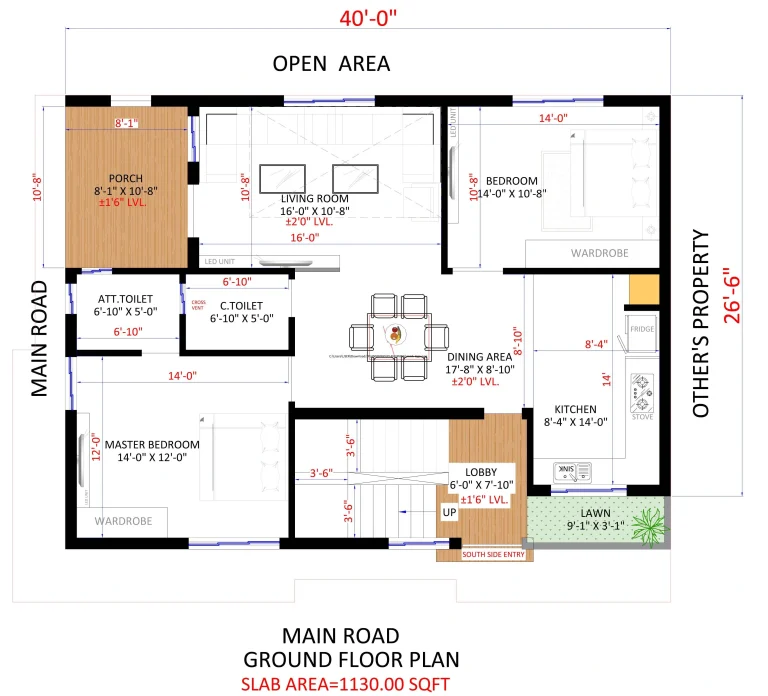
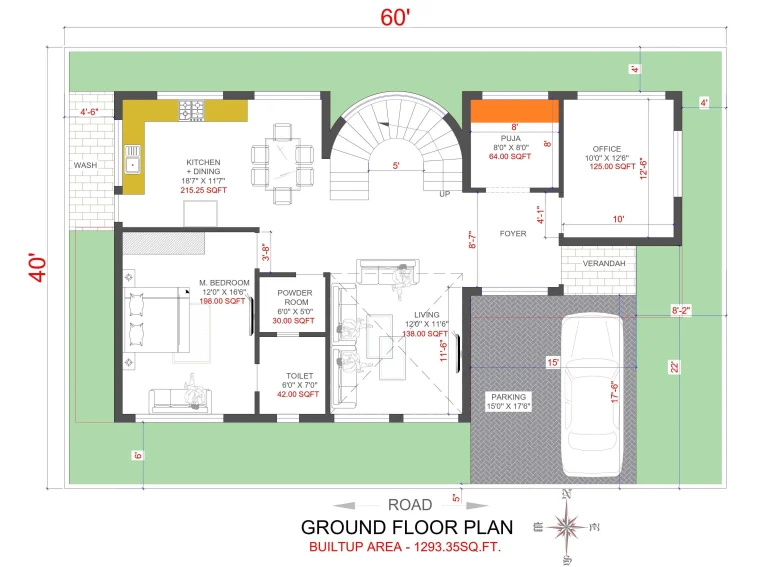
Now, let’s discuss the most crucial part: floor planning. A well-designed floor plan is what ultimately determines the functionality and flow of a home.
Ground Floor Plan (Comfort + Accessibility)
The ground floor is typically designed with senior citizens and daily-use activities in mind. Typical Layout:
Living Room (Near Entrance)
Dining Area
1 Bedroom (With Attached Bathroom)
Kitchen + Utility Area
Common Toilet
Parking Space
Tip: It is important to keep the bedroom on the ground floor, especially for elders.
First Floor Plan (Family Living Space)
This floor is ideal for main family activities.
Layout Idea:
2 Bedroom (Attached Bathroom)
Family Lounge / Living Area
Balcony
Pooja room (optional)
Small study/work area
Tip: Position the balcony to face the road to ensure both good ventilation and aesthetic appeal.
Second Floor Plan (Flexible Space)
You can customize the second floor according to your specific needs.
Options:
Guest Room
Home Office
Gym / Hobby Room
Open Terrace / Garden
Tip: A terrace garden or a sit-out area significantly enhances the lifestyle value of your home.
G+2 House Elevation Design Ideas
The elevation serves as the “first impression” of your home. A well-executed elevation design enhances both the value and the visual appeal of the house.
1. Modern Elevation Design
Straight lines and a clean structure
Neutral colors (white, grey, beige)
Glass railings and large windows
Perfect for: Urban homes
2. Contemporary Elevation
A mix of textures (stone + wood finishes)
Unique shapes and structural projections
Incorporation of lighting elements
Perfect for: A stylish and unique look
3. Minimalist Elevation
Simple design
Minimal ornamentation
Functional aesthetics
Perfect for: Budget-friendly homes
4. Luxury Elevation Design
Double-height entrance
Premium materials (marble, cladding)
Designer lighting
Perfect for: High-end villas
G+2 House Construction Cost in India (2026 Guide)
Now, for the most important question—how much will it cost to build a G+2 house?
Cost Factors:
Location (City vs. Town)
Material quality
Design complexity
Labor charges
Average Construction Cost (India)
| Type | Cost per sq.ft |
| ——————— | ————– |
| Basic Construction | ₹1500 – ₹1800 |
| Standard Construction | ₹1800 – ₹2500 |
| Premium Construction | ₹2500 – ₹4000+ |
Example Calculation:
If your plot size is: 30×40 (1200 sq. ft.)
Total built-up area (G+2):
1200 × 3 = 3600 sq. ft.
Estimated Cost:
Basic: ₹54 Lakh – ₹65 Lakh
Standard: ₹65 Lakh – ₹90 Lakh
Premium: ₹90 Lakh – ₹1.4 Cr+
Note: The cost of interiors, furniture, and approvals is separate from these estimates.
Key Considerations When Designing a G+2 House
1. Robust Structural Planning
The foundation and column design should be planned from the outset to support a G+2 structure.
2. Ventilation and Natural Light
Proper ventilation and ample sunlight are essential on every floor.
3. Vastu Considerations
Entrance direction
Kitchen placement
Bedroom orientation
4. Staircase Placement
Position the staircase in a location that minimizes wasted space.
5. Parking Planning
There should be adequate parking space available on the ground floor.
Common Mistakes People Make
Starting construction without future planning
Neglecting ventilation
Underestimating the budget
Adopting a haphazard floor plan
Failing to hire a professional architect
Tip: Always have your design created by an expert—this saves on long-term costs.
Why is Professional Help Essential for G+2 House Design?
A professional architect:
Creates a perfect layout tailored to your specific plot
Optimizes your budget
Assists with obtaining legal approvals
Provides a design that is both modern and Vastu-compliant
Final Thoughts
A G+2 house design is not merely a structure—it represents a blend of your lifestyle, future planning, and investment. With the right floor plan, elevation, and budget strategy, you can build a home that is both highly functional and visually stunning.
If you are currently in the planning stage, do not rush the process—a smart design can make your life significantly easier.
FAQs (Frequently Asked Questions)
Q1. What is a G+2 house design?
A G+2 house design refers to a structure featuring two additional floors built above the ground floor (First Floor + Second Floor)—essentially, a three-story house.
Q3. Can a G+2 house be built on a small plot?
Yes, a G+2 house design can easily be constructed even on small plots—such as 30×40 or 40×50 feet—thereby allowing for more efficient utilization of space.
Q4. Can a G+2 house generate rental income?
Absolutely; you can generate a substantial rental income by renting out one or two of the floors.
Q5. Which elevation design is best suited for a G+2 house?
Modern and contemporary elevation designs are the most preferred choices, as they are stylish, functional, and future-ready.
Q6. Is Vastu essential for a G+2 house?
This depends entirely on your personal preference; however, many people choose to adhere to Vastu principles to foster greater positivity and balance within the home.
Q7. What is the biggest mistake made in G+2 house design?
The most significant errors include commencing construction without proper planning, neglecting ventilation, and failing to accurately estimate the budget.
Q8. Can a G+2 house be expanded further in the future?
Yes, it is possible to add additional floors in the future, provided that the foundation and structural framework were built with sufficient strength and capacity from the outset.
About the Author