
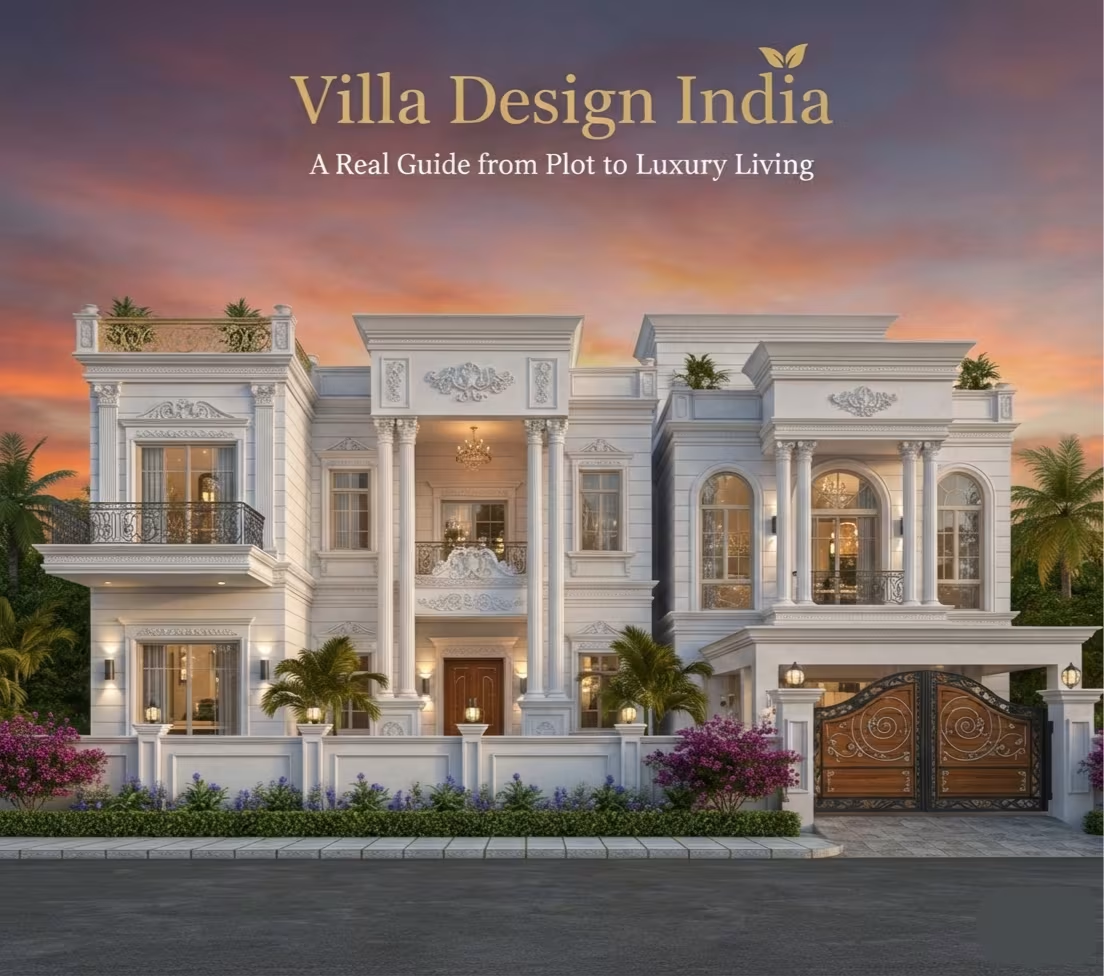
Villa Design India: A Real Guide from Plot to Luxury Living
The first question after purchasing a plot is: How to plan a villa design?
Planning a villa in India is not just about luxury looks—it’s about smart layout, climate-friendly design, Vastu balance, and clear budgeting from the start. With the right planning and practical decisions, you can turn a simple plot into a comfortable, long-lasting villa that fits your real lifestyle.
Looking at photos on Pinterest isn’t enough. The reality on the ground is different. Budget, weather, Vastu, approvals, labor—everything needs to be managed simultaneously. Many people make hasty decisions and then make changes mid-construction. This is where the highest costs are incurred.
I’ve personally witnessed this in the planning phase of many villa projects—if the design is clear from the beginning, construction goes smoothly. If the design is incomplete, confusion on the site is inevitable.
This guide is written in simple language, with real tips that are truly useful when building a villa in India.
What is Villa Design India? Understand it in simple terms.
A villa isn’t just a large house.
Villa design focuses on:
- Privacy
- Open space
- Natural light
- Indoor-outdoor connection
- Premium feel without unnecessary expense.
Villa design in India is slightly different from designs abroad. Here:
- The weather is often harsh
- Vaastu is essential
- Joint family needs exist
- Parking and servant areas also need to be planned.
Therefore, copy-and-paste designs don’t work. Local planning is essential.
Step 1: Understand the plot – then design
Rule 1: The plot will determine the design.
Check everything—size, direction, road access, surroundings.
Truthful tip:
In one project, the client wanted a glass-faced villa on a west-facing plot. The daytime heat became unbearable. Later, a shed had to be installed, doubling the cost.
Checklist:
- Plot size and shape
- Road direction
- Sun movement
- Water drainage
- Nearby buildings
If the plot is 30×60, consider a compact villa.
If it’s 50×80, consider a courtyard villa.
Also read: Luxury Home Design: When a home becomes more than just a home, it becomes an experience
Step 2: Planning Based on Lifestyle
The biggest mistake in villa design in India:
Rooms create space, not lifestyle.
You should initially ask these questions:
- How many people will be staying?
- Do guests come often?
- Do you need a work-from-home space?
- Is an outdoor seating area necessary?
- Are there any plans to expand in the future?
I saw a villa plan—the client had designed a large living room, but it was only used during festivals. Later, they had to create a small family lounge for everyday use.
Think:
Design for everyday life. No pretentious design.
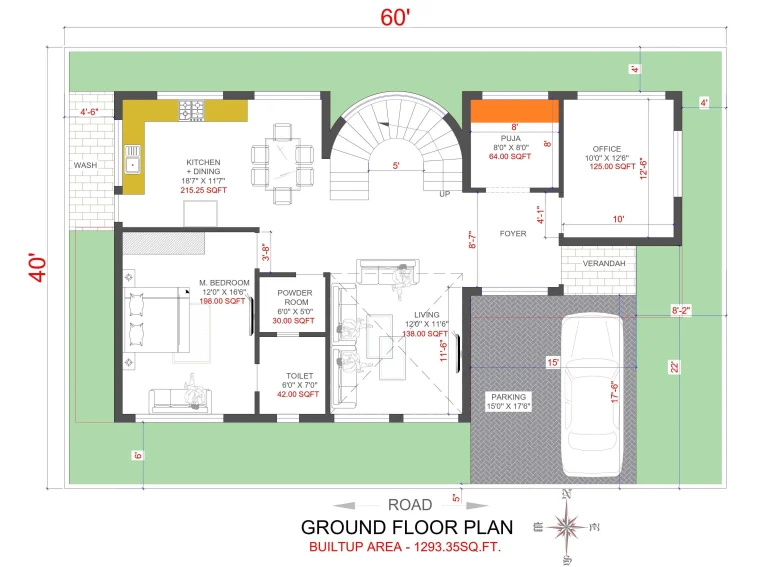
Step 3: Ground Floor Planning – The Most Used Zone
The ground floor has always been the most important area in India.
Ideal Ground Floor Layout:
- Living Room
- Dining Room
- Kitchen
- 1 Bedroom (for parents/guests)
- Powder Washroom
- Stairs
- Garden Access
Real Experience Tip:
The stairs are not directly visible from the entrance. Privacy is compromised. The living room overlooks the garden, so the villa automatically feels premium.
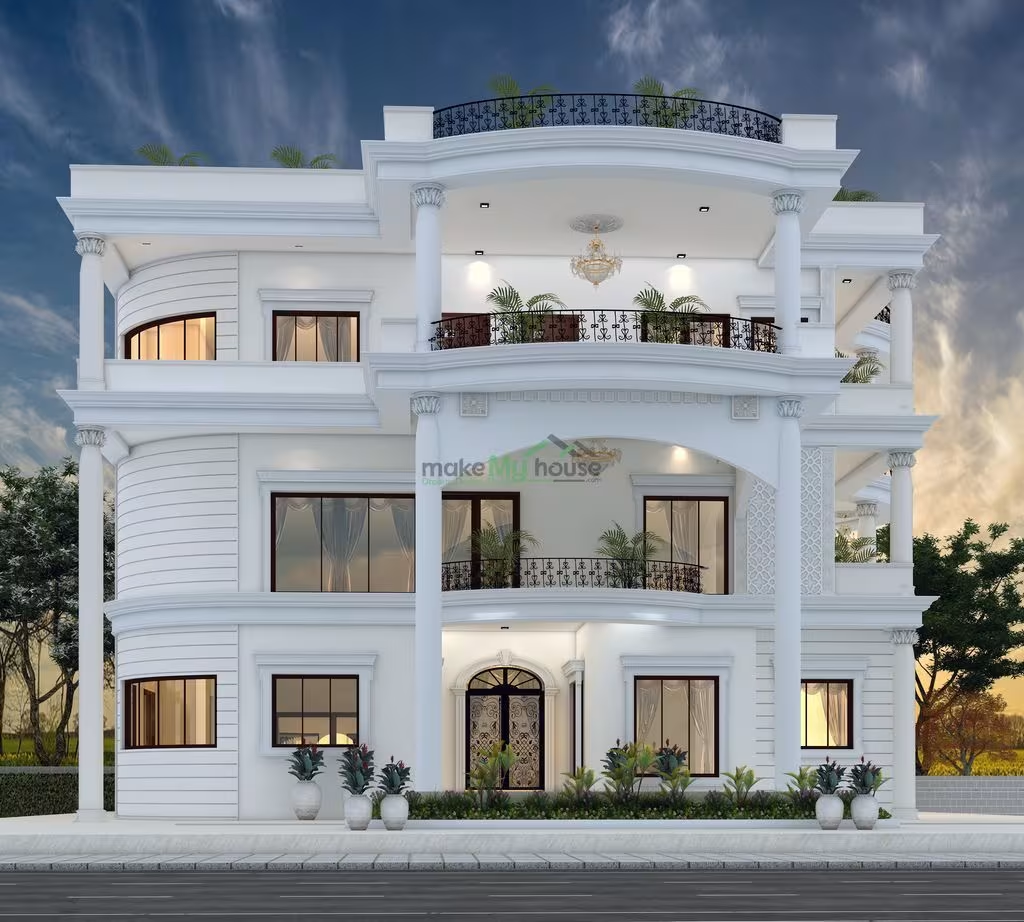
Step 4: First Floor – Private Zone
The first floor is typically the bedroom zone.
This includes:
- Master bedroom with balcony
- Children’s room
- Family lounge
- Study/work room
Balcony planning is essential.
In India, a balcony isn’t just a showpiece—it’s a place to have morning tea.
In one villa project, we included a north balcony. It doesn’t receive direct sunlight, but it provides excellent natural light. The client said:
“This is my favorite space in the house.“
Step 5: Indoor-Outdoor Connection
The charm of Indian villa design comes when the inside and outside are connected.
Options:
- Courtyard
- Lawn
- Deck
- Pool (if budget allows)
- Sit-out area
Small plot?
A mini courtyard can also be created.
Tactical tip:
- Install sliding doors.
- The space feels larger.
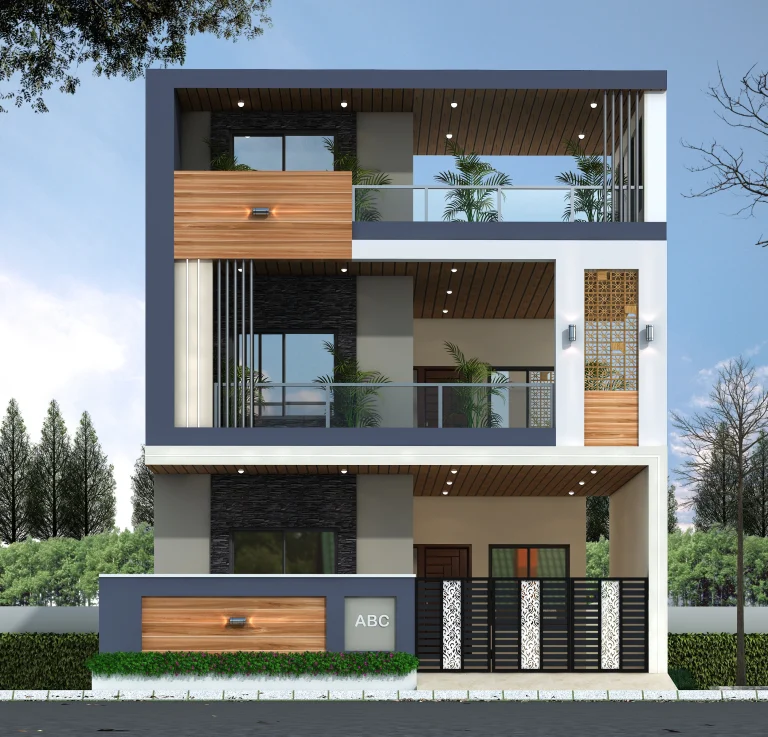
Step 6: Elevation Design – First Impressions
The front of a villa is its most visible part.
But a fancy design alone won’t be enough.
When planning elevations in India:
- Sun direction
- Rain protection
- Dust
- Maintenance
A white villa looks good on Instagram.
The ground reality:
Dust accumulates. Maintenance is high.
Better Options:
- Textured Paint
- Stone Cladding
- Neutral Colors
Step 7: Vastu + Practical Design Balance
Vastu in India cannot be ignored.
But it shouldn’t be followed blindly either.
A balanced approach is best.
Common Points:
- Entrance Direction
- Kitchen Location
- Stair Location
- Master Bedroom
Lessons from a Real Project:
The kitchen wasn’t feasible in the southeast.
We adjusted the layout and came up with a different Vastu solution.
Client Happy + Design Practical.
Step 8: Lighting and Ventilation
The main hero of Indian villa design: natural light.
Plan:
- Large Windows
- Skylights
- Courtyard
- Cross Ventilation
Mistakes People Make:
Relying on AC for design.
Then the electricity bill comes as a shock.
In one villa project, cross ventilation was so strong that AC usage was minimal during the day.
Also read: House Design Plans: A Complete Guide to a Modern, Functional, and Smart Home
Step 9: Parking Planning
Often overlooked, this leads to problems later.
Consider:
- Car size
- Future second car
- Visitor parking
- Covered parking
Gate width is also important.
Narrow gate = daily hassle.
Step 10: Storage Planning
Luxury villa without storage = dirty villa.
Include:
- Store room
- Linen storage
- Shoe storage
- Kitchen pantry
- Wardrobe space
Tactical tip:
Keep storage hidden.
Less visible clutter.
Common mistakes in Villa Design India
1. Copying foreign designs
Glass-heavy villas do not work in the Indian climate.
2. Overdesign
Too many materials. Too many shapes.
Maintenance nightmare.
3. No future planning
Lift space, extra room, terrace use—think.
4. Budget ignore
Design different, budget different—conflict guaranteed.
5. Late architect involvement
After starting the construction, the design has to be changed.
Real pro tips (from site experience)
Staircase width should be a minimum of 3.5 ft.
- Bedroom minimum 11×12
- Master bedroom 14×16 ideal
- Window height 7 ft gives good light
- Ceiling height 10–11 ft gives a luxury feel
- Utility space skip mat karo
Utility space was skipped in a villa project.
Later, the washing machine came to the kitchen.
The client kept regretting.
Budget planning for a villa
Villa design India budget range depends:
- basic villa
- Mid luxury
- high luxury
Cost factors:
- Location
- Materials
- design complexity
- Labor
Simple design = cost control.
Complex shapes = high cost.
Best locations for villa living in India
Villa culture is growing fast:
- bangalore outskirts
- Goa holiday villas
- Pune
- Hyderabad
- Indore
People want space + privacy.
FAQs – Villa Design India
1. What is the starting cost of the Villa design?
Design fees depend on the architect and project size. Usually, 2–5% of the total construction cost.
2. Is a villa on a 30×60 plot possible?
Haan. Compact luxury villa plans are possible.
3. Is it necessary to follow Vastu?
The majority of clients in India follow it. A balanced approach is best.
4. Are villas and bungalows the same?
Mostly similar. Villas require more premium planning.
5. How long does design and construction take?
Design: 2–3 months
Construction: 10–18 months
6. Are courtyard villas possible on small plots?
A mini courtyard is possible with smart planning.
7. Will the villa design change during construction?
Avoid it. Both costs and delays increase.
8. Best elevation style?
Simple, modern, and climate-friendly.
Conclusion
Villa design in India isn’t just about luxury.
It’s the result of planning, patience, and the right decisions.
It’s better to take your time at the beginning than to make hasty decisions.
Understand the plot. Understand your lifestyle. Keep your budget clear.
Involve the architect early.
I have seen it time and again on site—
Clients who delve into the details during the planning stage have a smooth construction.
Those who skip the process inevitably experience mid-construction stress.
Building a dream villa is possible.
With smart planning.
About the Author

17 thoughts on “Villa Design India: A Real Guide from Plot to Luxury Living”